Somebody asks for your website. You send them a Facebook link. They squint at it, scroll past three months of shared memes looking for your next date, and give up.
It happens constantly. And the band never hears about it.
Here’s the short version. Your Facebook page is a great place for people to find you. It’s a bad place for them to decide whether to hire you. Those are two different jobs, and one page can’t do both.
You’re Renting, Not Owning
Everything on your Facebook page sits on land somebody else owns. Facebook decides who sees your posts. Facebook decides what the page looks like. Facebook decides what the page is even called this year.
None of that is a conspiracy. It’s just how a free platform works. You get the reach, they get the rules.
The trouble starts when that page is your only address. A page that gets restricted, merged, hacked, or locked behind a login takes your whole presence with it. I’ve watched bands lose eight years of photos and every follower in an afternoon. Nobody had a backup, because nobody thought of a Facebook page as something that could go away.
What Happens When Reach Drops
Ask any band that built a following on Facebook a decade ago what their posts reach now. The number is usually a fraction of what it was.
Platforms change what they show people. That’s their business, not yours. But if your only way of telling three thousand followers about Saturday’s gig is a post they might not see, you don’t really have three thousand followers. You have three thousand names on somebody else’s list.
This is exactly why a site and an email list matter. Not because social stopped working, but because it stopped being reliable on its own.
What a Website Does That a Page Can’t
Start with search. When a couple types your band’s name plus “wedding” into Google, a real website with your name in the address has a shot at being the answer. A Facebook page usually is not. Neither is a link page.
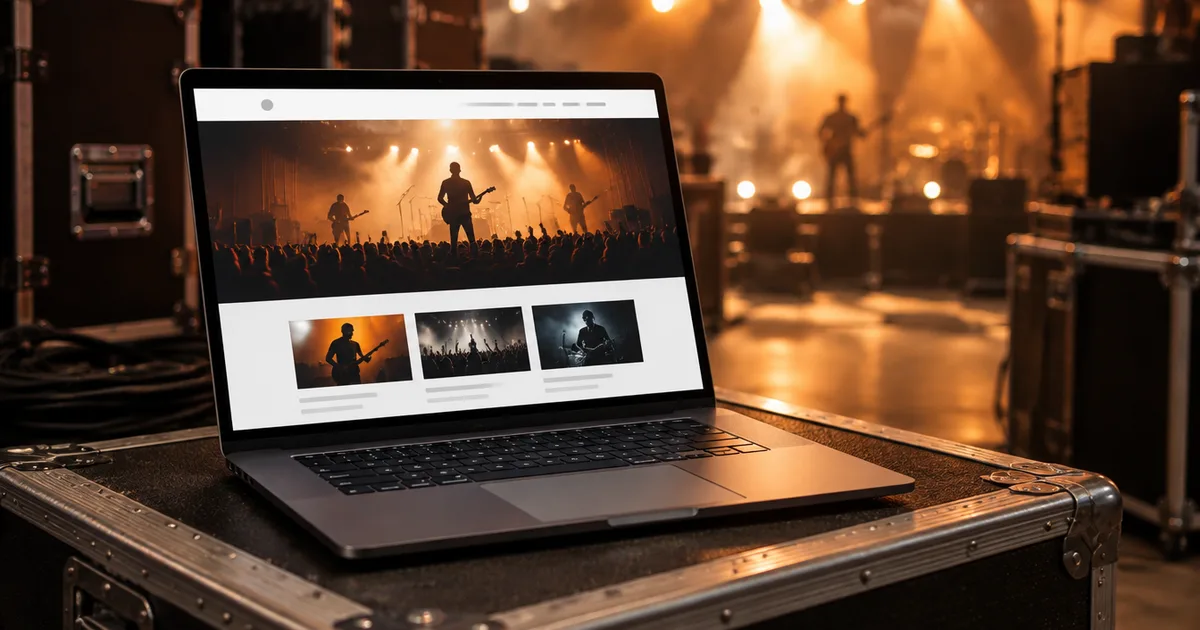
Then there’s the stuff a booker needs in one place: a calendar, a strong live clip, a stage plot, a bio, and a contact form. On a Facebook page, all of that is scattered across tabs and buried in a timeline. That’s the thirty-second problem I wrote about in what bookers actually check first.
And a site works when you’re not there. A booker looking at you on a Tuesday afternoon doesn’t have to message you and wait. They get what they need and make a decision.
Your Site and Your Socials Work Together
This is not an argument against Facebook. I use it. Most working bands should.
Think of it this way. Social is where people find out you exist. Your website is where they decide you’re worth booking. Discovery on one, decision on the other.
So point them at each other. Your Facebook page links to your site. Your site links out to your socials. Every gig post carries the link to your calendar page. The Instagram bio points home. Over time, the traffic you rent turns into an audience you own.
The Minimum a Band Website Needs
You don’t need twelve pages. You need a handful of things done well:
- A domain with your band’s name in it. Yours, renewed by you.
- Upcoming dates, with town, venue, time, and a ticket link.
- One strong live clip, visible without scrolling.
- A short bio a booker can read in a minute.
- A contact or booking form that reaches a real person.
- A stage plot and input list a sound engineer can actually use.
That’s a weekend of work if you already have the photos and the video. Less if somebody helps.
The Address You Keep
I learned all of this building sites for other people’s businesses. A restaurant that only exists on a delivery app is one policy change from disappearing. A band that only exists on a social page is in exactly the same spot.
Keep the page. Post to it. Just don’t let it be the only thing with your name on it.
Own one address, and let everything else point at it.