


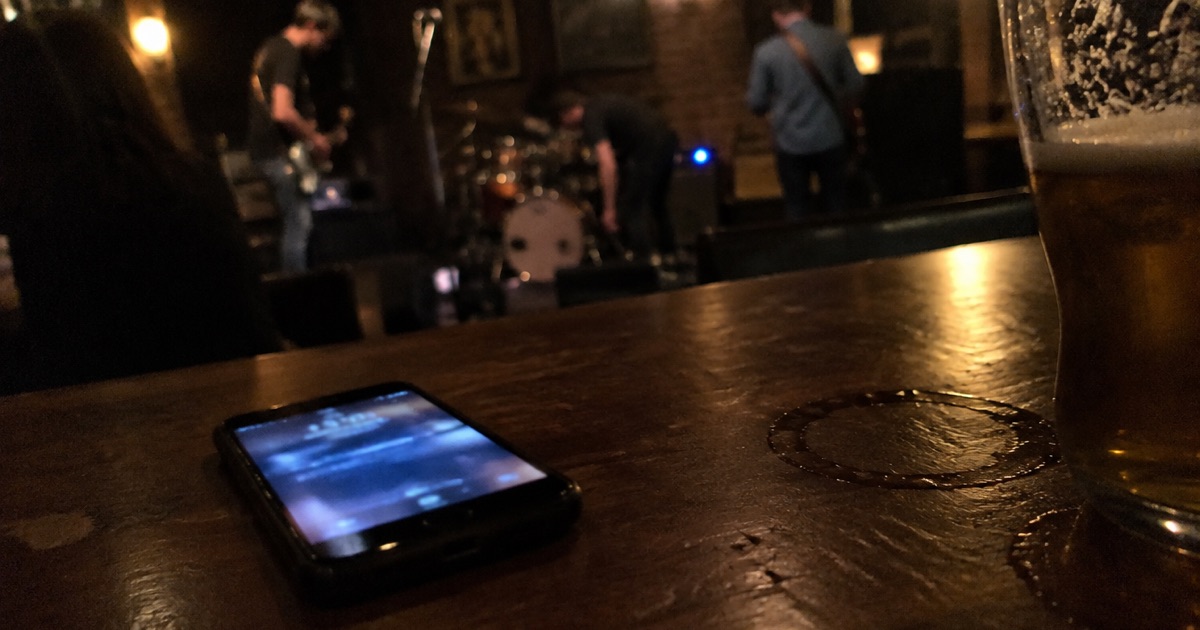
Three days before the gig somebody in the band remembers to post about it. One flyer, one caption, forty likes. Saturday comes and the room is half full.
Sound familiar?
The fix isn’t posting more. It’s posting in a pattern, so the show gets announced, remembered, and talked about afterward. Four posts per gig. Same four every time, which means you can build them once and reuse the shape forever.
One Post Isn’t Promotion
One post is an announcement. Promotion is repetition.
Think about how anyone actually decides to go out. They see a show mentioned, think “maybe,” and forget. They see it again and check who else is going. They see it the morning of and make the call. Almost nobody decides the first time.
So the goal isn’t to shout louder. It’s to show up at the two or three moments when somebody is deciding what to do with their weekend.
There’s a second reason to spread it out. Not everyone who follows you sees any given post, so four posts is four chances at a different slice of the same audience. The person who missed Monday might catch Friday morning.
Post One: The Announcement
Go up as soon as the date is confirmed. A few weeks out is fine, and further out is fine too if the room is a big deal.
Keep it simple. Band, venue, town, date, time. Tag the venue. If there are tickets, the link goes in the post, not in a comment.
What makes an announcement work is a reason to care. “We’re back at the Fireside” beats “Live music Saturday.” A photo from the last time you played that room beats a generic flyer, because it shows a crowd instead of a graphic.
Post Two: The Reminder
Four or five days out, usually earlier in the week the show lands in.
Don’t repost the flyer. Nobody re-reads the same image. Give them something new: a clip from a rehearsal, a photo of the set list in progress, one song you’re pulling out for the first time in years.
The information repeats. The content doesn’t. That’s the whole trick.
If you’re short on material, film thirty seconds at the end of the next rehearsal and sit on it. One phone, one song, no production. That clip is your reminder post for whichever gig comes next, and nobody watching it cares that it was shot in a basement.
Post Three: Day-Of
Morning of the show, or early afternoon.
Short and specific. “Tonight. The Fireside. 9pm. Come say hi.” A picture of the van loaded or the stage getting set does more here than anything polished, because it says the thing is real and happening in a few hours.
This is the post that converts the maybes. Somebody sitting on the couch at six o’clock is deciding right then, and you want to be on their screen.
Post Four: The Thank-You Everyone Skips
The day after, or two days after at the latest. This one gets skipped constantly, and it’s the one doing the most long-term work.
Post a photo of the crowd. Thank the room by name and tag it. Thank the people who came out. If another band was on the bill, tag them too.
Three things happen. Your regulars feel seen. People who missed it see that it was worth showing up to, which makes them likelier next time. And the venue gets a post that makes their room look busy, which venue owners notice at booking time. Being easy to promote alongside is part of getting asked back. That’s the same reason what bookers check first keeps coming back to proof that somebody else already trusted you.
Make It a Template
Once the pattern works, stop reinventing it.
Write the four captions with blanks in them and keep the file somewhere you’ll find it:
Announce: We’re back at [VENUE] in [TOWN] on [DATE]. [TIME]. [Tickets/No cover]. Tag @[venue].
Remind: Working up [SONG] for [DAY] at [VENUE]. [DATE], [TIME].
Day-of: Tonight. [VENUE], [TOWN]. [TIME]. Come say hi.
Thanks: Thank you [VENUE] and everyone who came out [NIGHT]. Photo by [NAME]. Back on [NEXT DATE].
Fill in the blanks on the day the gig gets confirmed. Schedule what you can. The whole run takes about ten minutes once the shape exists.
Four posts, every gig, every time. The rooms fill up because people were reminded, not because you got louder.