
It is Thursday. The gig is Saturday. Somebody in the group chat says “should we post something?”
Then three people argue about which photo, one person makes a flyer at eleven at night, and it goes up twelve hours before doors.
That is how most bands do social media, and it is exhausting for everybody. There is a much calmer version: one afternoon a month, everything queued, and then you go back to being a musician. This is genuinely how I run my own marketing, and it is the only reason it happens at all.
Why “Post When You Remember” Fails
Two reasons, and neither is laziness.
The first is timing. A show announcement needs to go up weeks ahead so people can put it in a calendar. Remembering on Thursday means you missed the window that actually fills a room.
The second is decision fatigue. Every individual post requires picking a photo, writing a caption, and deciding if it is good enough. Doing that once takes ten minutes. Doing it twelve separate times across a month takes far more than two hours, because each time you pay the cost of starting from nothing.
Batching removes both problems. You make the decisions once, in a block, when you are in the right frame of mind for it.
Start With the Calendar
Open your gig calendar first. Everything else hangs off it.
For each show in the next six to eight weeks, you already know the posts you need. Announce it well ahead. Remind people the week of. Post the day of. Thank everyone after. That is the four-post pattern, and it is completely plannable in advance because the dates are already fixed.
Write them on paper first. A rough grid of dates down the left, what the post is on the right. Four gigs is sixteen posts and it takes about fifteen minutes to sketch.
Then look at the gaps. Two weeks with nothing scheduled is where filler creeps in, so mark those now and decide what goes there before you are staring at an empty Tuesday.
Build a Simple Post Bank
This is the piece that makes the whole habit sustainable.
Keep one folder of raw material. Every time somebody takes a decent photo or a clip at a gig, it goes in there that night. Two minutes of work, right when you have your phone out anyway.
By the time your planning afternoon comes around, you have thirty things to choose from instead of scrolling back through a camera roll looking for something usable.
- Live shots with the crowd visible.
- Short clips from the stage.
- Load-in, soundcheck, and the van. The unglamorous parts.
- Photos other people sent you or tagged you in.
- Venue signage and marquees with your name on them.
Name the files with the date and the venue so you can find them later. That one habit turns a folder into an archive, and an archive is where next winter’s throwback posts come from.
Schedule It With Free Tools
Meta gives you a free scheduling tool that covers both Facebook and Instagram from one place. The name of it changes every couple of years, so look for the business or professional dashboard attached to your page rather than for a specific product name.
You write the post, attach the photo, tag the venue, pick the date and time, and it goes out on its own. That is the entire workflow, and it costs nothing.
A few things worth doing while you are in there.
Tag the venue in every scheduled post while you are writing it. It is far easier now than trying to remember later, and tagging is most of where the reach comes from.
Put the day-of post at a sensible hour. Late afternoon, when people are deciding what to do with their evening. Not nine in the morning.
And check the queue once a week for ninety seconds, in case a gig moved.
Leave Room for Real Moments
Scheduled posts are the floor, not the ceiling.
The queue guarantees you never go dark and never miss an announcement. What it cannot do is capture the thing that happened at eleven o’clock on Saturday when the whole room sang the second chorus.
So leave gaps on purpose. Two or three slots a month with nothing planned, for whatever actually happens. Those are almost always your best posts, because they are unmistakably real.
The mix that works is most of the month planned and a handful live. If you flip that ratio you are back to Thursday-night panic. If you plan every single slot, the account starts to feel like a billboard.
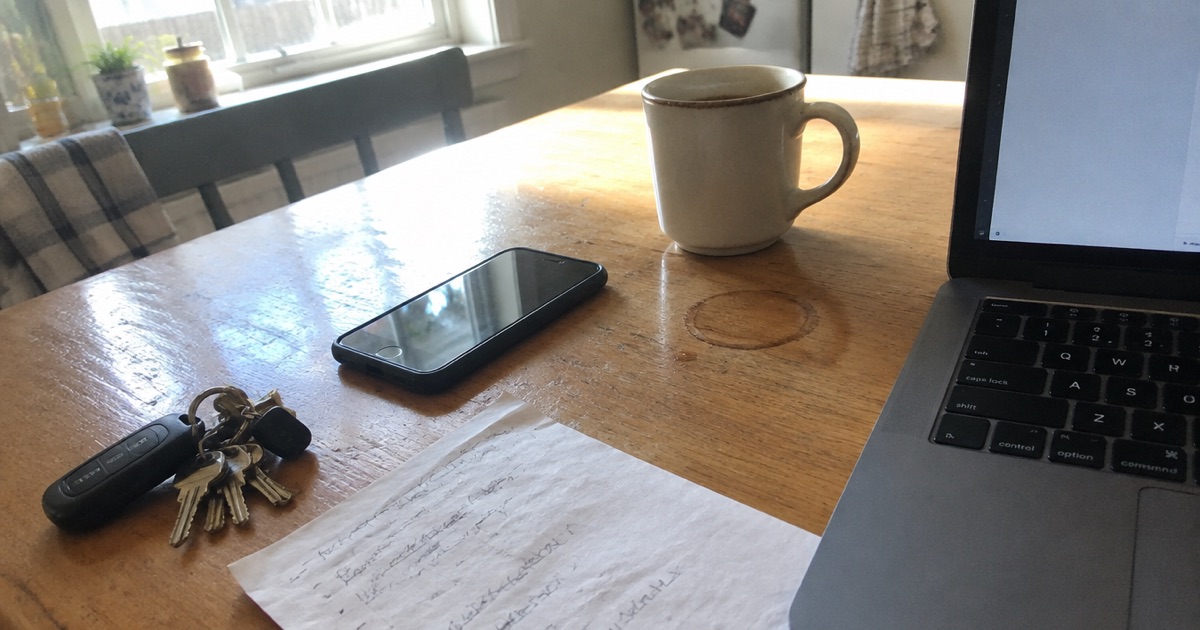
One afternoon. A pot of coffee, the calendar, the photo folder, and about two hours. Then the band gets to spend the rest of the month being a band, which is the only reason any of us signed up for this.