

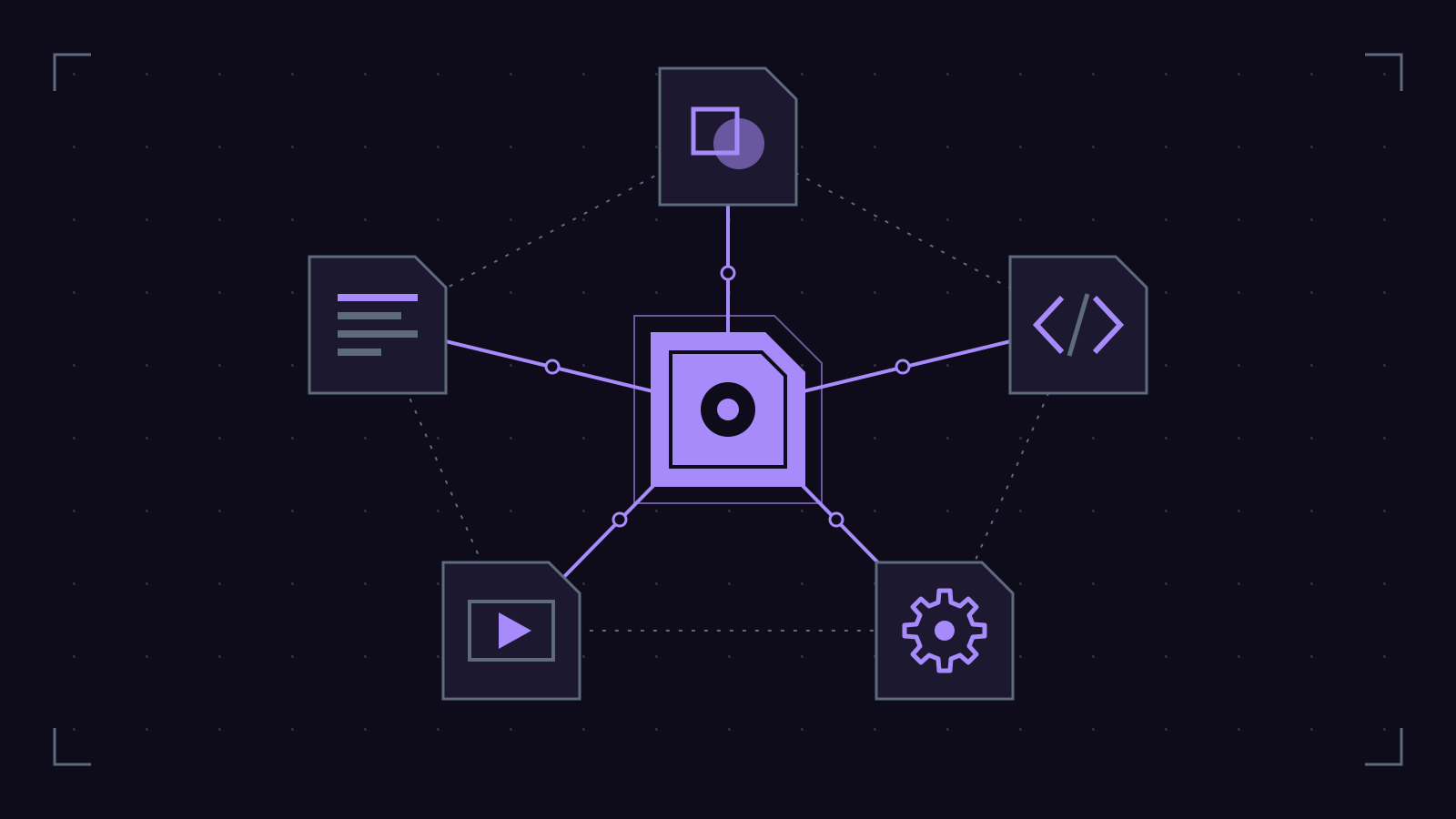
An AI-staffed studio is a business where AI does the work and a person makes the decisions. Design, development, content, automation and media are all real functions here. Each one is staffed by AI running inside workflows we built. One human principal directs all of it and signs off on everything that leaves the building.
That’s the definition. The rest of this piece is about what it looks like day to day, and why it matters if you’re a small business trying to decide who to hire.
It is not a chatbot with a logo
Most people hear “AI studio” and picture somebody typing a prompt into a chatbot and pasting the answer into a client deliverable. That’s not this.
A chatbot answers a question. A studio runs a process. When we build a website, AI writes the HTML and CSS, drafts the page copy, checks the schema and flags broken links. When we run a monthly report, AI pulls the Search Console data, formats the tables and writes a first pass of the summary. Each of those is a repeatable workflow with rules, checks and a defined result at the end.
The difference is structure. Anybody can get one clever paragraph out of a model. Getting the same quality on the four hundredth page is a different job entirely.
What “staffed” means
Think about how a traditional agency is organized. A designer, a developer, a copywriter, maybe an SEO specialist, and a project manager holding the whole thing together. Each seat is a function.
We kept the functions. We changed what fills them.
- Design. Layout direction, type and color systems, image treatment.
- Development. Hand-written HTML, CSS and JavaScript, deployed through GitHub to Netlify.
- Content. Page copy, blog posts, newsletters, social calendars.
- Automation. Scripts that move data between the tools a business already pays for.
- Media. Hero films, animation, photo composites and 3D character work.
Every seat is filled by AI working inside a workflow with written rules. The rules cover voice, file structure, SEO standards and a pre-launch checklist. When the same correction comes up more than twice, it becomes a rule, so the system stops repeating the mistake.
What “directed” means
This is the part people skip. It’s also the part that makes the model work.
AI is fast and it never gets tired. It’s also confidently wrong on a regular basis. It will invent a statistic, misread a client’s service area, or write a sentence that sounds fine and says nothing at all. Left alone, it drifts.
So nothing ships on autopilot. Every page, every email draft, every automation that touches a client’s money gets a human read before it goes out. The principal decides what gets built and in what order. The principal catches the wrong phone number and the line that doesn’t sound like the client. And when something breaks, the principal is the one accountable for it.
We wrote more about where that line sits in What AI Can’t Do (And Why That’s the Point). Short version: judgment stays human. Labor doesn’t have to.
Why structure it this way
Because the numbers say it works.
Over seven months we logged 1,258 projects and 13,317 exchanges with the AI systems that do the work. We shipped 472 files. We serve 43 active clients right now, and 14 websites were fully rebuilt by AI under direction. We broke those numbers down in We Ran 1,258 AI Projects in Seven Months, including the things that didn’t hold up.
Those numbers aren’t there to say we hustle. They’re there to show something structural. A traditional agency’s output is capped by how many people it can afford to hire. An AI-staffed studio isn’t capped that way. The constraint moves from labor to judgment. How many good decisions can the principal make in a day?
A lot, it turns out. Once the grunt work is off the table.
The studio is the demo
Here’s the part we like best. We don’t have to explain what AI can do for a business in the abstract. We are the business.
Our own site was rebuilt this way. Our hosting-renewal invoices go out through an automation built on Zoho and Google Apps Script. Our newsletters come off an engine. A weekly comic strip goes from script to art to publish on a pipeline, with 13 strips shipped so far. Monthly SEO reporting runs off a DataForSEO pipeline instead of somebody’s Friday afternoon.
When a plumber or a law firm asks whether any of this actually works, we don’t need a slide deck. We point at the studio. The shipped work is laid out on the proof page.
What it means for you
If you own a small business, the practical upshot is pretty simple.
You get work that used to take several specialists, directed by one accountable person who knows your business. You don’t get bounced between departments. Revisions come back fast because drafting is fast. And the decisions about your brand and your customers are still made by a human who picks up the phone.
What you don’t get is magic. AI won’t fix a business that doesn’t know what it sells. It won’t replace your judgment about your own customers either. It does the labor. You and the principal still own the thinking.
Is this where agencies are headed?
For a lot of the work, probably. Plenty of agencies are bolting AI onto the process they already had. Same org chart, a few new subscriptions. That helps at the margins.
Building the studio around AI from day one is a different move. The workflows assume AI writes the first draft of everything. The review assumes a human reads every output. The cost structure reflects that, and so does the turnaround.
We think small businesses benefit most. They could never afford a full agency bench. Now the bench is software, and the person directing it still answers the phone.
If you want to see what an AI-staffed studio would actually do for your business, start here.