

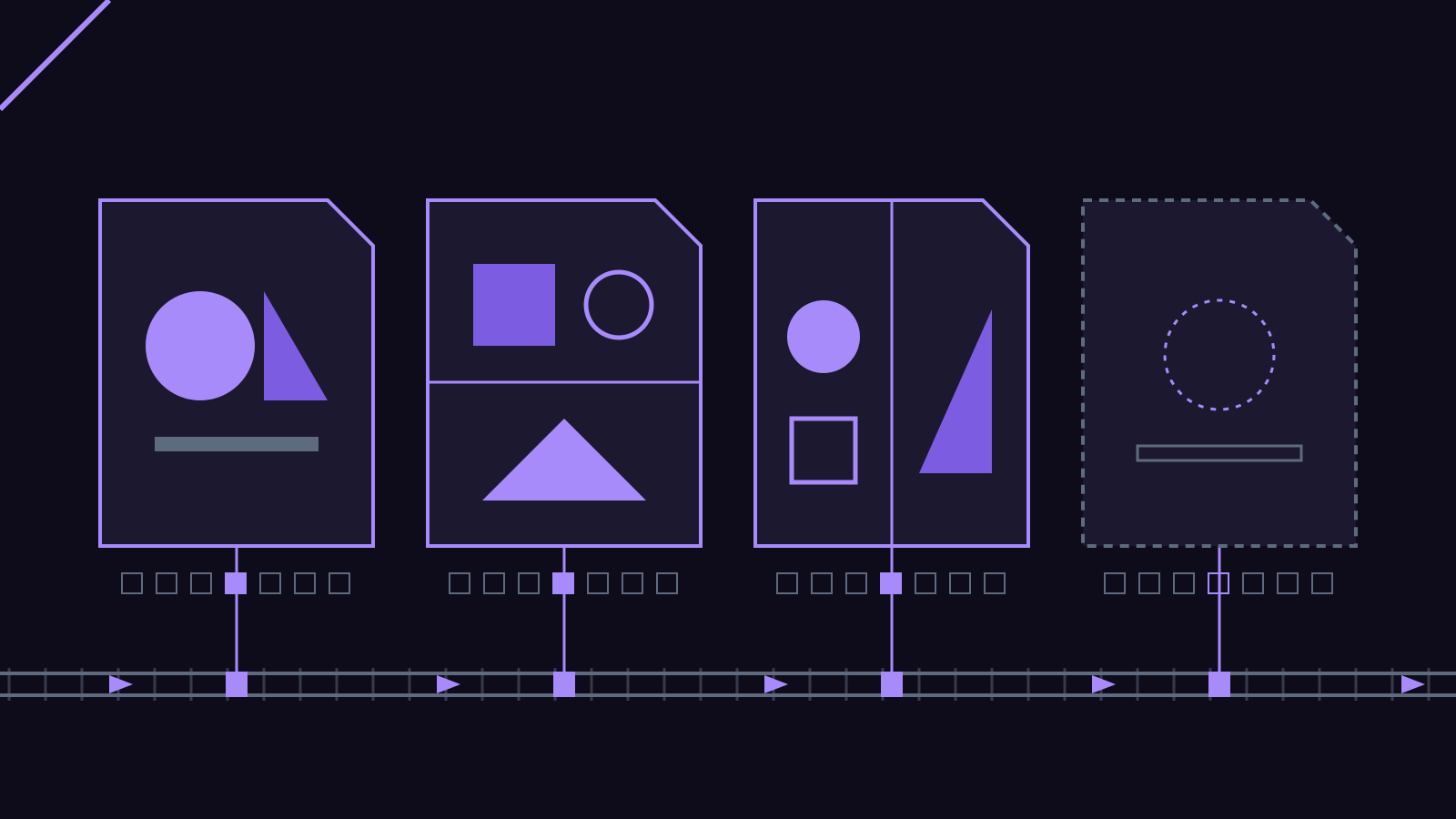
Every week a comic strip goes out. Script, art, publish. Thirteen strips so far, and not one of them started with somebody staring at a blank page on a Sunday night wondering what to post.
That is the whole idea behind a content pipeline. You stop treating content as a creative emergency. You start treating it like a production line, with a person at the end who says yes or no.
Why small business content dies in week three
You know the pattern. Somebody decides the business needs a blog, or a newsletter, or a steady Instagram presence. The first post is great. The second is fine. By week three it’s late, by week five it’s gone, and the last post on the site is from two springs ago.
It’s not a talent problem. It’s a system problem.
Content that depends on someone finding a free hour will always lose to the phone ringing and the customer who needs something today. That’s not laziness. That’s running a business.
A pipeline fixes it by splitting the work into stages and handing each stage to whatever does it best. For us, most of those stages are staffed by AI. The last one, the one that decides whether anything goes out with our name on it, is a human call. Every time.
What the comic strip pipeline actually looks like
The comic is a good example because it’s weirdly hard. It needs a joke that lands. It needs characters that look the same from week to week, and art that holds up on a phone screen. If a pipeline can handle that, it can handle a blog post about gutter cleaning.
Stage one: the script
The script stage starts from a brief. The characters, how they talk, the running bits, the tone. AI drafts several options against that brief. Most get cut. The one that survives gets tightened, because first drafts are always a beat too long.
Stage two: the art
The approved script moves to art. This is where consistency matters most. A character who changes haircut every week isn’t a character, so the art stage works from reference sheets, and anything that drifts off-model gets redone instead of shipped.
Stage three: publish
Lettering, sizing for each platform, scheduling. The boring part. Also the part that quietly kills most content efforts, because nobody wants to resize an image four times on a Tuesday. That’s exactly the kind of job AI should own.
The step between every stage
A person looks at it. Every script, every panel, every caption. The system produces and the principal approves. That’s the model we run everything on, and it’s the reason the strip sounds like itself every week instead of like a random joke generator.
The same pipeline, pointed at your business
You probably don’t need a comic strip. But the structure transfers to almost any recurring content a small business puts out.
A blog. Keep a running list of questions your customers actually ask. AI drafts against your voice notes, a human edits and approves, and it publishes on a schedule. We run three blogs this way and the bones are the same for all of them.
Social calendars. Plan a month of posts at once. Draft them in a batch, review them in one sitting, schedule them out. We built Facebook and Instagram posting automation so the publishing step doesn’t depend on anyone remembering.
A newsletter. Same idea, longer form. We wrote up how ours works in The Newsletter Engine.
The point is the pattern. Brief, draft, review, publish. Once it exists, the content shows up whether or not anyone had a good week.
What it takes to actually run itself
“Runs itself” is a slight exaggeration, and we’d rather say so up front. Here’s what it really takes.
A real brief
The brief is the most important document in the whole thing. Who is this for? What do you sound like? What do you never say? What topics are off the table? AI is very good at following a clear brief and very bad at guessing what you meant. Spend the time here and every stage downstream gets easier.
A review step nobody can skip
Once the drafts start looking good, the temptation is to let them go straight out. Don’t. Review is where you catch the line that’s technically true but wrong for your customers. It’s also where the content stays yours.
A schedule that doesn’t need a human to trigger it
If publishing depends on someone logging in and pressing a button, the pipeline has a single point of failure. It’s a busy person. Scheduling and posting should be automated. Approval should not.
Somewhere to keep what works
Reference sheets for art. Voice notes for writing. A short list of what landed and what flopped. The pipeline gets better because it remembers, and it can only remember what somebody writes down.
What a pipeline won’t do
It won’t make a business interesting by magic. If there’s nothing to say, a pipeline will produce nothing, very efficiently.
It also won’t replace judgment. AI will happily write a post about a sale you’re not having, or a service you stopped offering last year. The review step exists for exactly that.
And it won’t write your best material. The job that went sideways and how you saved it. The thing a customer said that stuck with you for a week. That comes from you. The pipeline is how it gets drafted, formatted and actually posted instead of living in your head forever.
Where to start
Pick one recurring piece of content. Just one.
Write the brief. Decide who drafts, who reviews, and how it gets published. Run it for a month without adding anything else. If it holds, add the next one. If it wobbles, the problem is almost always the brief or the review step, so fix those before blaming the tools.
That’s how the comic started. One strip, one pipeline, a human signing off on every panel. Thirteen strips in, it’s still going, and it doesn’t eat anyone’s Sunday night.
The services page lays out each of the content engines we run this way, along with the work behind them.
If you’ve got content that keeps dying in week three, let’s build it a pipeline.